Welcome to the Blog

You guys, we made it all up…
So why are we stressing ourselves out trying to do it perfectly?
We inherited a world full of invented rules. Instead of holding them lightly, many of us spend our lives white-knuckling our way through them, checking boxes someone else designed as though there's a cosmic scoreboard keeping track.
Yoga invites us to question this.

What Your Body Knows
Most of us spend our weeks in a kind of mental marathon: emails, decisions, deadlines, to-do lists that breed new to-do lists. By Friday, the mind has run a sprint and our brains are fatigued.
We live in a culture that prizes cognitive output above almost everything else. Think faster, plan better, optimize more. The brain gets all the credit. But science tells a more interesting story — something us yogis have long understood.
Did you know that your gut alone contains more than 100 million neurons? This is what scientists refer to as a "second brain," capable of acting independently. The communication between gut and brain flows both ways, continuously influencing emotions, beliefs, and even decision-making.

The Water We Swim In
When you've been living inside a broken system long enough, it's easy to believe you're the problem.
You're more irritable than usual, more reactive, not sleeping well, and you're engaging in behaviors that you know aren't good for you.
And somewhere underneath all of it, the inner critic gathers momentum: You're not doing enough. Something is wrong with you. You should be calmer.
But what if that isn't the whole story?

What the Old World Knows
You may not know this about me, but I’ve been studying wine for almost as long as I’ve studied yoga.
I have a special love for French wine.
Unlike California wines, French wines tend to show restraint. They don’t overpower a meal; they partner with it. There’s a subtle elegance that invites you to slow down, pay attention, and let the experience unfold.
That’s part of why I was so excited to travel to France for the first time. I planned the trip around food and wine—appointments with sommeliers, restaurants, and small eateries all mapped out.
On my first day, I got sick.

Right now, you are here and you are safe.
In yoga this morning, a student made a comment indicating she didn’t think she could enjoy the holidays this year in light of the recent elections. The week of the elections, I had a hard time processing the results. I found myself in a cycle of forgetting about them until something reminded me, sending a jolt of fear through my body as my mind conjured up images of a future reality that resembled a cross between The Handmaid's Tale, Idiocracy, and The Last of Us.
After recognizing that it's not sustainable for me to keep repeating that cycle, I decided to make it part of my meditation practice, which goes like this…

I jumped out of an airplane and felt nothing.
I jumped out of a moving airplane from 14,000 feet and felt nothing.
I was not scared or thrilled—I was completely indifferent. When I landed, I saw my friend who had jumped out of the plane minutes before me, hopping up and down and screaming with excitement.
I planned this skydive trip because I could tell something in me had shut down and I hoped the thrill of jumping out of a moving airplane would startle it awake, but it didn’t.

Boundaries are about your behavior.
It can feel hard setting boundaries when it’s not something you’re used to. It feels like you’re being rigid and asking a lot of the other person.
This approach can leave you feeling frustrated and resentful when the other person doesn’t alter their behavior the way you want them to.
In truth, boundaries make no request of the other person, but are guidelines for how *you* engage.
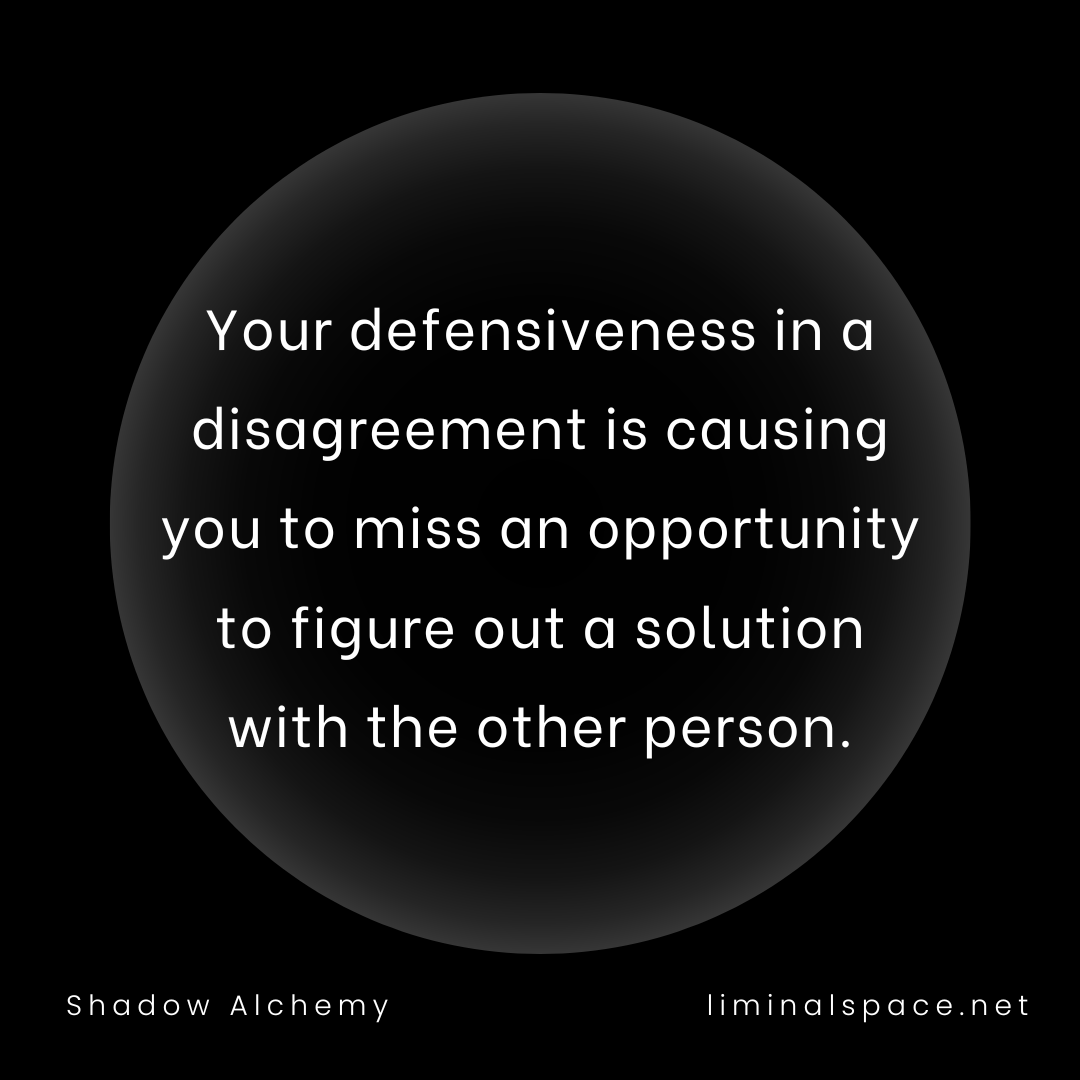
On being defensive.
I would staple this one to my forehead if I could. My defensiveness roadblocks me constantly.
Luckily, I know what to do with it when it shows up, so instead of holding me back I move through it quickly and enjoy better outcomes in my relationships.
I don’t write these posts from a high-and-mighty-I-got-it-all-figured-out place. I am an ongoing work in progress, just like you.
BUT, what I have is a treasure trove of tools that I’ve spent my life collecting to help you through areas of friction in your life.
I’m your shortcut.
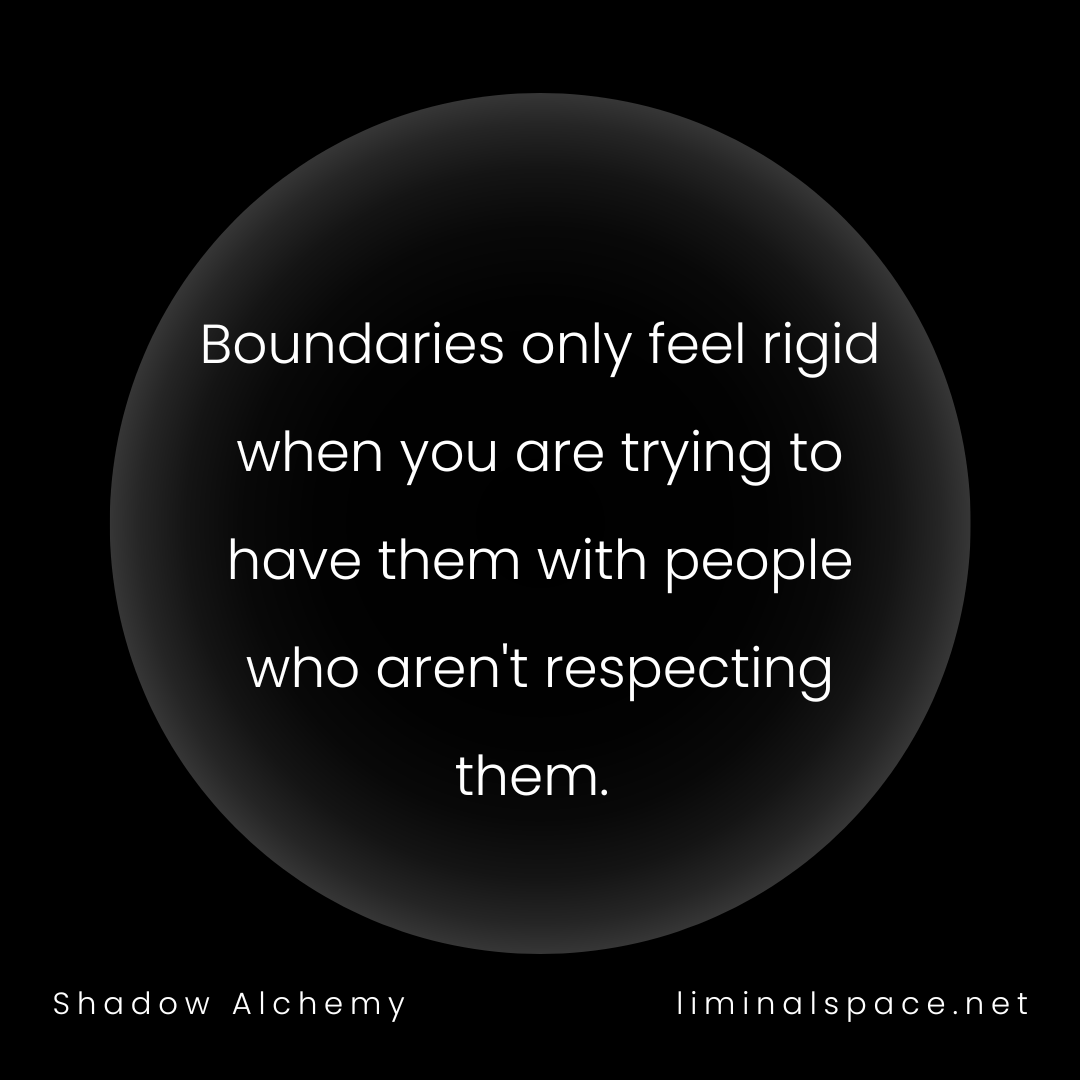
When boundaries feel rigid.
When someone respects your boundaries it usually only takes one or two times of them bumping up against your boundaries before they adjust. Eventually, those boundaries feel effortless for you.
If, energetically, it feels like you’re using all of your strength to hold your line, it’s because the other person doesn't care about your boundaries. You're not being too rigid, they're not respecting your line in the sand.
Note of the difference.
The space between what-is and what you want.
This is not to say that we should stop dreaming or thinking big for ourselves—keep doing that for sure!!
This is more about how much we RESIST what-is.
Shadows develop when we run away from what-is.
Shadows haunt us and the more we resist their existence, the denser and more warped they get, the more ashamed of them we become, and the harder it gets to face them.
You are not alone in this.
Would you like to be a more skillful communicator?
Merriam Webster defines communication as "a process by which information is exchanged between individuals through a common system of symbols, signs, or behavior."
However, our interpretation of those symbols, signs, and behavior can be very subjective.
Do you let others define you?
I think about how much of my early adult life was constructed based on who I thought I was supposed to be and what I thought I was supposed to be doing.
I never took the time to consider my own wants and needs. The few times I was able to identify what they were, I labeled them impractical.

Are you letting life happen to you?
To live “at-the-effect of our lives” means to be in a constant state of reacting to what’s in front of us without any personal sense of control. We tend to blame others for the position we find ourselves in, depend on them to validate us, and spend a lot of time trying to please them. Often times we counter this by being overly controlling which can leave us feeling even more trapped and reactive.

Do you judge yourself for being lazy?
“Lazy” is a term I’ve used against myself my whole life. When I’m low energy I label it as lazy and chastise myself thinking a better person would have the energy to accomplish more. I have some story in my mind that I haven’t earned the right to slow down until I attain a particular level of accomplishment, which is an elusive target.

Remembering Our Divine Feminine.
Here's a truth that our society is set up to make you forget: You are perfection, incarnate. You are not broken, or fragmented, or separate from the Divine Energy that brought you here. You are ALL you will ever need to be, right now, as is. To know this is to honor your birthright, to live your purpose, and to transmit your gifts to others.

What outcome are you trying to control?
At 6 months old, my dog “Luna” was a stray wandering the streets of Sacramento on her own. One day, she stumbled upon a homeless guy in Oak Park who was epileptic and having a seizure and she stayed near him and licked him until the seizure ended. She followed him around for the rest of the day and although he enjoyed her company he knew he couldn’t take care of her, so he found a rope and tied her to the back of a stairwell in an apartment complex and sat across the street contemplating what to do with her. (I know this because a few months later he approached us and told me the story.) That stairwell led to my apartment door.

How do you qualify your self-worth?
In my early 30’s, after ending a long and painful relationship with someone who did not deserve a morsel of my time, I met a man who was vibrant, engaging, self-aware, ambitious, and funny and the moment he expressed interest in me I ran for the hills.

What happens when we are the antagonist?
When we talk about toxic relationship behaviors like gaslighting, love-bombing, or ghosting, it's usually in the context of how bad it feels to be the VICTIM* of them, while pointing the finger at someone else as the culprit. But what happens when we are the ones carrying out TOXIC* behaviors?
Rarely do we hear someone admit they have a bad habit of gaslighting their partner (i.e., the act of manipulating someone causing them doubt their perspective). Many who do probably don’t know they are doing it, and even if they become aware of it, the behavior is so harmful and criticized that it’s unlikely they’d admit it out loud. So how do we reconcile it when we are the one doing harm?

Can you take a compliment?
The sitcom "New Girl" single-handedly carried me through the pandemic lockdown a couple years ago. It was such a pleasure to witness the dynamic of the main characters and I can easily relate to their awkwardness and immaturity. Jessica Day is the female lead whose inability to take a compliment makes me laugh out loud every time because she perfectly embodies how compliments make me feel.
There are some compliments I can receive with grace and ease because these are aspects of myself I acknowledge and accept as me. Other compliments make me want to run out of the room from the discomfort of it because somewhere along the line I decided that I don’t get to be those things and I believe they aren’t me (even though secretly I wish they were).
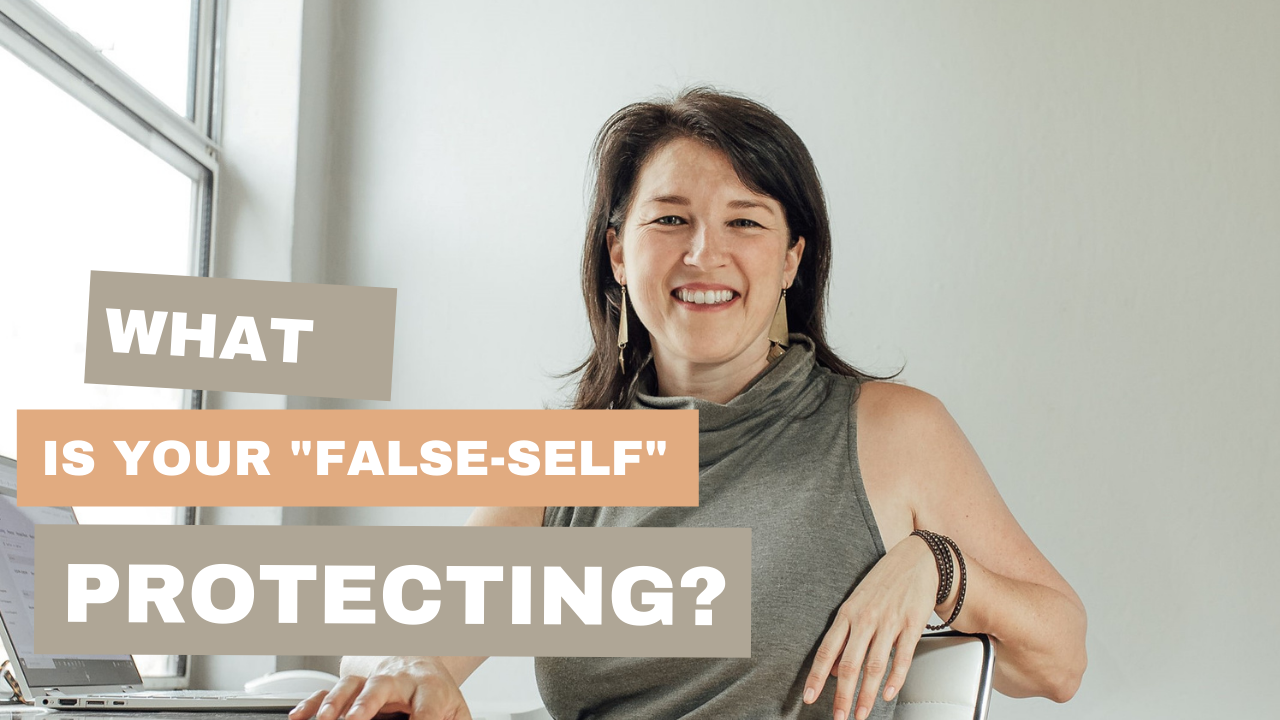
What is your “False-Self” protecting?
The late psychologist Dr. Donald Winnicott introduced the idea of the “False-Self” which he described as a personality façade people adopt to protect the vulnerability of their “True-Self”.
It’s most likely we have many False-Selves, but when I consider an over-arching one in my life, what comes to mind is how I spent most of it pretending to be UNAFFECTED*. As a SENSITIVE child, I was vulnerable to people who liked to push my buttons and I thought that if I appeared to not care they would stop, and/or I’d feel it less. My logic was reinforced by others who told me, “Why do you let them get to you so much?”, as if my feelings were the problem, not the button-pusher’s behaviors.